
Sustainable by design: Next-generation datacenters consume zero water for cooling
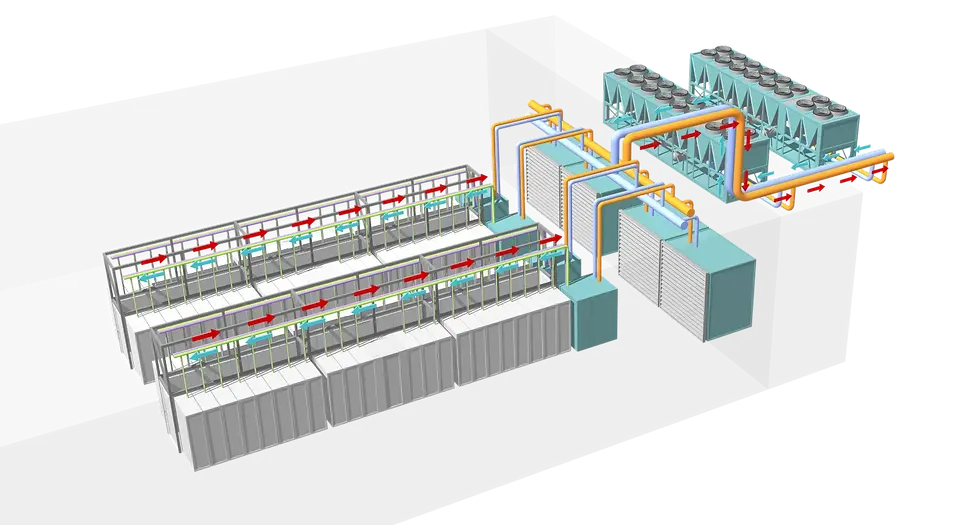
This zero-water evaporated for cooling design recycles water through a closed loop system.
Zero-water evaporation and the quest for ultra-low Water Usage Effectiveness
These new liquid cooling technologies recycle water through a closed loop. Once the system is filled during construction, it will continually circulate water between the servers and chillers to dissipate heat without requiring a fresh water supply.
We measure water efficiency through Water Usage Effectiveness (WUE), which divides total annual water consumption for humidification and cooling by the total energy consumption for IT equipment. We are continually investing in improving the design and operation of our datacenters to minimize water use. In our last fiscal year, our datacenters operated with an average WUE of 0.30 L/kWh. This represents a 39% improvement compared to 2021, when we reported a global average of 0.49 L/kWh. This WUE reduction is due to our ongoing efforts to actively reduce water wastage, expand our operating temperature range, and audit our data center operations. We also expanded our use of alternative water sources, such as reclaimed and recycled water, in Texas, Washington, California, and Singapore.
We have been working since the early 2000s to reduce water use and improved our WUE by 80% since our first generation of datacenters. As water challenges grow more extreme, we know we have more work to do. The shift to the next generation datacenters is expected to help reduce our WUE to near zero for each datacenter employing zero-water evaporation. As our fleet expands over time, this shift will help reduce Microsoft’s fleetwide WUE even further.
Mitigating energy impacts
Traditionally, water has been evaporated on-site to reduce the power demand of the cooling systems. Replacement of evaporative systems with mechanical cooling will increase our power usage effectiveness (PUE). However, our latest chip-level cooling solutions will allow us to utilize warmer temperatures for cooling than previous generations of IT hardware, which enables us to mitigate the power use with high efficiency economizing chillers with elevated water temperatures.
The result is a nominal increase in our annual energy usage compared to our evaporative datacenter designs across the global fleet. Additional innovations to provide more targeted cooling are in development and are expected to continue to reduce power consumption.
Pilot projects and implementation
Although our current fleet will still use a mix of air-cooled and water-cooled systems, new projects in Phoenix, Arizona, and Mt. Pleasant, Wisconsin, will pilot zero-water evaporated designs in 2026. Starting August 2024, all new Microsoft datacenter designs began using this next-generation cooling technology, as we work to make zero-water evaporation the primary cooling method across our owned portfolio. These new sites will begin coming online in late 2027.
Full article here:
Comments